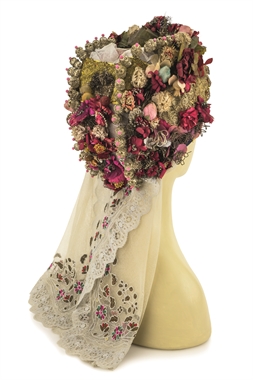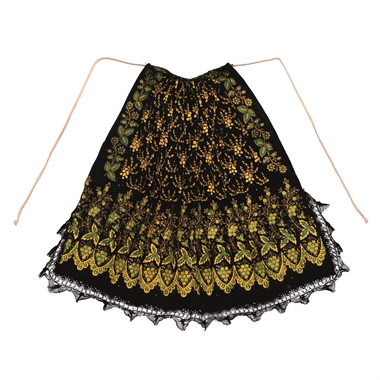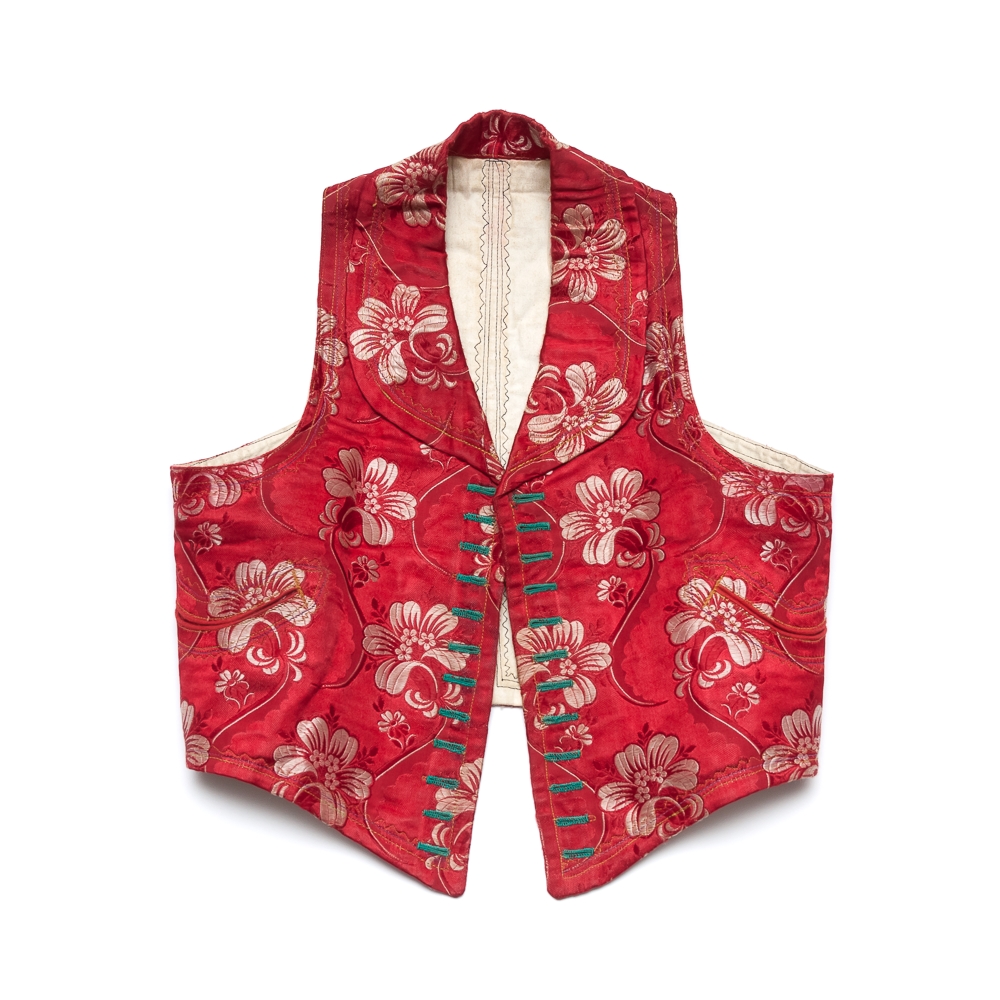
The Collection brings together the clothing of members of the Croatian national community from different areas of Central and Eastern European countries – Austria, the Czech Republic, Kosovo, Hungary, Romania and Serbia. It was formed in 2014 by extracting related material from the existing museum collections, and it has more than 750 objects. The entire clothing contained – sets, its individual parts, various decorative accessories and textile fragments, which were shaped under the cultural influences of neighboring peoples and changed with the development of trade and crafts, were made and used predominantly in the second half of the 19th and first half of the 20th century. The most numerous group consists of the traditional costumes of the Croatian sub-ethnic groups of Bunjevci and Šokci from Vojvodina (Republic of Serbia), represented in all typological and stylistic versions. Less represented are the costumes of the Šokci from Rekaš, Karaševci, Burgenland Croats and Croats in the Czech Republic, as well as various Croatian ethnic groups from the Hungarian part of Baranja. A modern research approach analyzes the changes and meanings of traditional costumes as a recognizable indicator of cultural identity, as well as their application in folklore art.
We use cookies to track visits to our pages (Google Analytics) for the purpose of improving the pages. The statistics are collected anonymously, and by accepting, you agree to the use of cookies. Find out more


.jpg)